The 5 Greatest Songs (According to Science)


What a difference a month makes.

These days, “scientific research” may as well not exist outside of the Corona-crisis. The eyes of progress are firmly fixed on antivirals, vaccines, and antibody tests.

But one recent study has blithely bucked this trend.

Back in late February, the day Bernie emerged as the Democrat front-runner following a decisive win in the Nevada caucus, researchers from the Anglia Ruskin University were wrapping up a year-long psychological study. In the midst of the current pandemic, the aim of their work sounds rather twee, perhaps even trivial. Yet their findings, published on Monday, offer an intriguing glimpse into our collective affinity with pop music.

The study’s lead researcher, Prof. Bo Lox, explains that her team aspired to combine “stochastic, neural, and hormonal” data, so as to gauge a person’s physiological response to popular records from the past thirty years. Lox noted that “preliminary testing highlighted the importance of using internal, subconscious responses to determine a person’s enjoyment of a song. Galway [Girl], for instance, tested far more negatively in survey-based research. Without our advanced methods, we would have had to account for individual reticence, in much the same way that electoral pollsters have to account for ‘Shy Tories’.”

2,500 volunteers took part in the experiment. Some, like Daniel Wilkes from Kettering, are self-confessed music aficionados. I got in touch with Wilkes, and, over an insightful afternoon phone call, he reflected on what initially drew him to the study:

I’ve always considered myself a man of taste. No Coldplay after X&Y. 2Pac and Biggie, of course, but none of this modern mumble dribble. I mean, anyone can drawl into an auto-tuner, right? My favourite band is probably Metallica… at least, that’s what I thought, until taking part in Lox’s research. You’ll laugh, I know, but my highest ranking song was actually “Swish [Swish]” by Katy Perry [and Nicki Minaj]. At first I was appalled. But, science is science. I actually listened to it on yesterday’s run — in an ironic way, at first. But a dozen repeats later, I’ve got to admit … it kind of slaps.”

However, not everybody involved was as open-minded as Wilkes. Lox provided me with an email sent to her by one of the volunteers, who shall remain anonymous out of respect for their privacy. The volunteer was disgruntled after being informed that their physiology was most powerfully attuned to Drake’s afrobeat-inspired hit, “One Dance”. While some of the email is too explicit to record here, I will offer a short extract:

It’s total bullsh*t! I LOATHE One Dance. It CANNOT be my favourite song. One Dance is the most inane, derivative rubbish I’ve ever heard. Even at sub 3 mins it overstays its welcome. I want my results wiped from the study. Email me proof of this. Your system is clearly flawed. B*tch. [Censorship my own].

Lox assured me that such hostile responses were few and far between. She also laughed at the suggestion that the system could be in any way defunct. “We used state-of-the-art wearable technology and telemetric signalling devices,” she explained. “People just refuse to believe that a bunch of wires and processors can know them better than they know themselves.” Evidently, Anglia Ruskin spared no expense in the pursuit of accurate results, even if these did prove hard for some volunteers to stomach.

So, without further ado, you’ll find below the top five songs as calculated by Lox and her team, starting with the most popular. Each song was awarded a final Approval Rating (AR) out of 100. The AR represents a collation of various biometrics, including subject heart rate, brain activity, hormonal secretion and perspiration. I’ve included the AR underneath each song title.


1. Swing Ya Rag (feat. Swizz Beatz) by T.I. (2008) (AR = 99.82)

It will come as a surprise to no one to see the third single from T.I.’s 2008 classic Paper Trail heading this list. Swing Ya Rag tested positively with almost every volunteer it was played to, and it’s easy to see why. The track is an anthem for anyone who’s ever shuffled awkwardly at a school disco, praying that they won’t be called upon next to bust a move in the centre of the dance floor. Don’t worry, Swing Ya Rag tells us. There’s no need to dance. No need at all. Simply pull out your designer durag (preferably Gucci or Louis Vuitton) and twirl it over your head. Or, while the clubs are closed, you might also consider contorting it into a makeshift mask.


2. In The End by Linkin Park (2001) (AR = 97.36)

In The End epitomises Linkin Park’s signature hybridisation of white-boy raps and screeched choruses, though it’s the opening piano riff that really elevates the track. Dr. Isla Vü, an associate researcher who worked on the project, had a mischievous glint in her eye as she discussed this entry. “In The End really was a standout case,” she observed. “The body’s internal response, especially in men aged 20-30, was far stronger than anybody in the team had anticipated. Over the first minute of audio, we detected a surge of nitric oxide in the urological capillaries, followed by a steady drip of nitric acid as Chester’s iconic chorus kicked in.”



3. You Oughta Know by Alanis Morissette (1995) (AR = 95.11)

It was on my third visit to the Anglia Ruskin Psychology Faculty in east Cambridge that I was presented with the complete set of finalised ARs. Arnold Yu, an undergraduate assistant, drew my attention to You Oughta Know as a song of particular scientific interest. According to Yu, the team’s findings might help answer the age-old question of why some humans possess lobed ears, while others are consigned to a lifetime of lobelessness. He revealed that Morissette’s strained, artificial diphthongs throughout the track appeared to cause tiny vibrations in subjects’ ear lobes, which in turn galvanised the pituitary gland, flooding the brain with endorphins. Were this hypothesis to be proven true in subsequent testing, the implications would be, in Yu’s words, “devastating”.



4. Galway Girl by Ed Sheeran (2017) (AR = 91.87)

I’ll admit, I was shocked to observe Ed Sheeran’s electronic-folk-pop mutant lurking in the top five. Since its release three years ago, the tune has been caricatured as a supremely flavourless chart-topper, with its ubiquitous radio-presence, jarring transitions and overcooked lyrics (the squeezing of “while her brother played the guitar” into the first verse is particularly egregious). Fortunately, Lox was on hand to dispel my confusion. She told me that the song’s extremely high AR is in fact a consequence of its widespread vilification. When individuals hear Sheeran’s declaration that “she played the fiddle in an Irish band”, they instinctively brace themselves to experience a “delicious sense of loathing”. It is this “expectation of hatred”, the anticipation of indulging in petty anger, that boosts serotonin, improving the subject’s overall chemical happiness. Touché Mr. Sheeran, touché.



5. Everybody (Backstreet’s Back) by Backstreet Boys (1997) (AR = 90.04)

“Of all the songs in the to top five,” Dr Vü confessed to me, “I was most chuffed about Backstreet’s Back.” I’m inclined to feel the same. The song oozes rhythm, whilst also fixing a spotlight on some of our deepest insecurities. The repeated question, “Am I sexual?”, for instance, strikes me as especially pertinent in our quarantined age, where omnipresent housemates and a one-in-one-out policy at Sainsbury’s Local has made life distinctly un-sexual. The irony, though, is that biometrics fed back an immediate spike in oestrogen secretions among female subjects, a hormonal response usually reserved in anticipation of a fertilised ovum.


image


* * *

And there we have it, our five greatest songs of the decade, as determined by data science. However you feel about the results is, quite frankly, irrelevant: this is the truth as told by our bodies, ourselves as concealed from the conscious mind. And once this pandemic has settled, you can be sure that Prof. Lox and her team will continue to push the limits of biometric research, unlocking ever deeper mysteries within the human psyche.

* 07/06/2020 An earlier edition of this article misspelt Vü as Vew.

Some Thoughts on Brexit


F780B79F-4A86-443D-92F3-DA0864B6753B


Ahh, Brexit. Has any portmanteau ever received such airtime? These days, only brunch comes close, thanks to a galvanising jab of avocado and Instagram. But while brunch can stir up some heated debate (I’d align myself with the pre-midday purists), I doubt a three-egg shakshouka will ever inspire such nation-breaking inaction as the EU referendum.

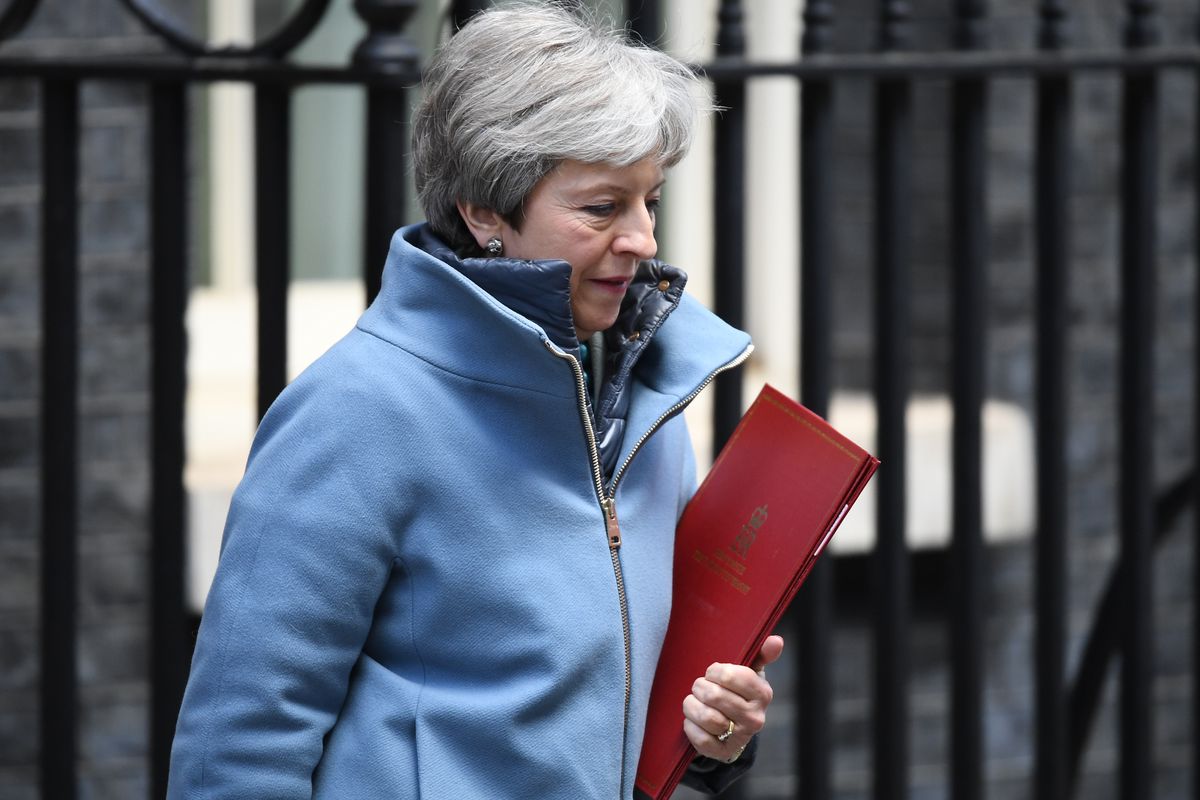
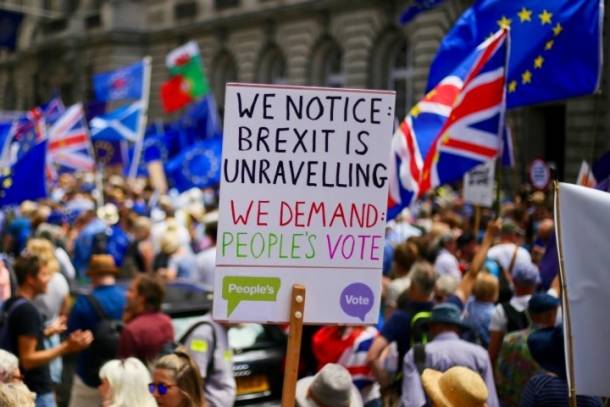
It’s been over three years since the fateful plebiscite, and we’re still about as close to a resolution as we were on the day of the result – perhaps even further, given the looming possibility of a People’s Vote. We arrived at this point through a combination of executive missteps and parliamentary inertia (on both sides of the aisle). May’s cynical call for an election in 2017 was the first portent of our present irresolution. It’s easy to see the rationale behind her decision: she was lightyears ahead of Corbyn in the polls, and had branded her party as best-placed to deliver a sensible Brexit. All the Tories needed to do was scoop up the redundant UKIP vote. However, May announcing her intention to trigger a snap election, after repeatedly stating that she wouldn’t, struck many as an unstable breed of mendacity, rather than the expedient cunning she was perhaps going for. She then continued to stymie her campaign through a series of blunders, including the promise of a vote on fox-hunting, a U-turn on her social care policies, and a marked evasion of several television debates. Her strategists also overestimated the share of votes they were set to absorb from UKIP defectors. UKIP was a one-policy party, and its supporters were only bound by a desire for a referendum on EU membership. Once that referendum had been conducted, its voters migrated to whichever party best represented their interests – and this wasn’t always the Conservatives. Especially in cities, a significant minority of former UKIP voters swung towards Labour, undercutting May’s predicted uptake.

Like a deflated whoopee-cushion, May thus returned to Brussels, bereft of her parliamentary majority and in a fraught confidence-and-supply agreement with the DUP: more brittle pig-iron than Iron Lady. And yet, credit where credit is due, she was able to hammer out a deal, the details of which she announced in mid-November 2018. Her plans were subsequently lambasted in every cranny of Parliament. Opposition parties sensed that Brexit had brought about a schism in the Conservative party, and that they’d be able to woo remain-leaning Tories into a vote against the government. At the same time, the ERG (a coterie of Eurosceptic Tory MPs, headed by Jacob Rees-Mogg) descended into predictable paroxysms over May’s “transition period”. They also had serious reservations regarding the Irish backstop, from which there could be no unilateral withdrawal. The backstop was similarly despised by the DUP, as it would indefinitely  tie Northern Ireland more closely to EU rules and regulations than the rest of the UK. In essence, it was a threat to the fabric of the Union. 

With all of these different factions vying for different Brexits, May’s deal was doomed. On her third attempt to get the withdrawal agreement through Parliament, she lost by 58 votes. The Conservatives were then trounced by Farage’s burgeoning Brexit Party in the EU elections, forcing May to resign the next day. 


C2D41D06-6D6B-4113-9D5E-E476409B11A6


Given the increased political turbulence since Johnson’s ascension to Number 10, I’ve been starting to wonder whether all the intransigence around May’s deal was for nothing. Hardline Remainers, who rejected Brexit in any guise, have unwittingly brought the UK closer than ever to the no-deal precipice, which Johnson is more than happy to guide us over, like so many lemmings. At the same time, the ERG’s insistence on a harder Brexit has only strengthened support for a second referendum, as people begin to panic about the consequences of no-deal; the Liberal Democrats, who also saw a massive resurgence in EU elections, have even determined to revoke Brexit outright. Views on either side of the Brexit spectrum have calcified. But the biggest loser is likely to be the Conservative Party. Last month, Johnson expelled 21 rebels from the party, including influential “moderate” Tories like Philip Hammond and Rory Stewart. There was an understandable sense of righteous anger over the purge, given that ministers, like Priti Patel, who voted thrice against May’s government, now find themselves in positions of power. Johnson no doubt felt that he needed his party fully committed to Brexit if it was to survive a general election. However, the recent Supreme Court ruling against Johnson’s government means that it’s increasingly unlikely he’ll deliver on his “do or die” ultimatum for the UK to exit the EU by 31st October. Instead, he’ll have to ask for yet another extension, this time until January 2020.    

It’s worth pointing out here that such an extension would drag out the Brexit debate to within a year of May’s proposed transition period. The difference, of course, is that under May’s deal we would actually have left. The situation is laughable. In retrospect, it’s apparent that May fully understood the almost insurmountable intricacies of negotiating a workable deal, which explains why her withdrawal agreement contains so many temporary arrangements. Her deal confirms, at least in principle, that we’ve left the EU, but leaves enough time to flesh out the details. This is crucial to resolving the Irish border problem. Sajid Javid, former Home Secretary and current Chancellor of the Exchequer, frequently cited “technological solutions” to the Irish backstop, with the vague caveat that these would only be available “in the future”. These solutions probably include the decentralisation of customs checks away from the border, fully-automated smart trade contracts powered by Blockchain technology, and non-intrusive licence plate detection. But all of this requires infrastructure, and infrastructure requires time.       

It is genuinely depressing to dwell on the taxpayer money and countless civil service work hours that were poured into securing May’s withdrawal agreement. The two extremes facing us, of a no-deal or a cancellation, render all of that worthless. At this late stage, there appears to me only one viable option: a second referendum (although not the one that you’re probably thinking of). The ballot paper ought to read something like this:

On 23rd June 2016, the British electorate voted to leave the European Union. Given this result, would you like to leave:

  1. Under the conditions of Theresa May’s deal*
  2. With no-deal

*[With the transition period now concluding in December 2021].

Though the thought of remaining in the EU still gives me a frisson of pleasure, I would hope that it’s apparent to everyone that overturning the result of the referendum would inflict profound damage to British society. 51.9% of those who voted in June 2016 would feel, quite justifiably, betrayed. There would be calamitous backlash in a general election, as well as the potential for civil unrest. That is why this alternative referendum is preferable to a People’s Vote. It accepts as a precondition that we are exiting the EU, but offers an opportunity to conduct this departure in an orderly fashion. Remainers, presumably, would rally behind May’s agreement, as would Brexiteers opposed to no-deal. Parliament would then have a specific mandate to execute, rather than just “leaving”, an instruction whose ambiguity has caused such problems. 


1893DAC2-D643-4AAE-AB31-B565B135B7C1


Almost a year on from May’s initial unveiling of her withdrawal agreement, it’s apparent that a failure to compromise has funnelled probability towards opposing edges of the Brexit spectrum. Perhaps, retroactively, we can help heal this divide through an alternative second referendum. There can be no compromise without sacrifice. Remainers will have to accept that a democratically-dubious People’s Vote is untenable; Hard Brexiteers must resign themselves to a transition period. Only then can we control the economic and social repercussions of Brexit, and finally realign our focus towards addressing the issues which fuelled such a rancorous vote in the first place. We can also stop talking about the bloody thing.

Speakers

Surround

The rumours, when they began, were

Sound.

Gratuitous in-wall speakers, every room

(Even the bathroom,

So a piss was no respite).

In fact, the architect had seen fit

To affix one device within the

Basin. It’s bass vexed the pool, and

Growled lemony spittle across

My new white jumper.

I’d flip flop back to the hallway

And curse,

Because I had to buy a new white jumper.